
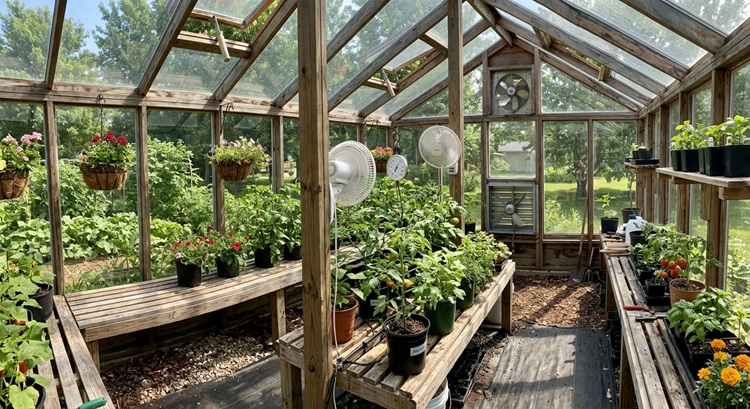
Every home gardener who steps up from outdoor beds to a hobby greenhouse quickly discovers a new set of variables to manage. While a glass or polycarbonate structure gives you a tremendous head start on the season and protection from harsh weather, it also creates an enclosed microclimate. Without proper management, that cozy, protected environment can quickly turn into a stagnant, overly humid trap that invites fungal diseases, pests, and weak plant growth.
Mastering airflow and humidity control is the cornerstone of successful greenhouse cultivation. Here is a practical, hands-on guide to dialing in your greenhouse environment for healthier plants, stronger stems, and a more productive growing season.
1. Understand the Delicate Balance Between Airflow and Humidity
Airflow and humidity are deeply intertwined. When the air inside a greenhouse sits completely still, a thin boundary layer of high humidity forms immediately around plant leaves. This stagnant micro-climate prevents plants from transpiring efficiently, which in turn halts the uptake of essential nutrients like calcium.
High humidity combined with stagnant air is the primary recipe for dreaded fungal pathogens such as powdery mildew, botrytis (gray mold), and damping off in seedlings. Conversely, excessively dry air stresses plants and forces them to close their stomata, reducing photosynthesis.
The goal isn’t to blast plants with a gale-force wind or scrub all moisture from the air, but to create a gentle, continuous exchange of air that keeps leaves moving slightly while maintaining an ideal relative humidity (RH) range—typically between 50% and 70% for most cool- and warm-season crops.

2. Upgrade Your Ventilation Strategy
Ventilation is your first line of defense against both stagnant air and runaway humidity. Relying solely on a single door or a small manual roof vent is rarely enough once plants mature and soil moisture begins to evaporate.
- Install Automated Roof Vents: Automatic vent openers—powered by wax-cylinder pistons that expand and contract with temperature changes—are a worthwhile investment. They ensure that hot, moist air can escape near the peak of the greenhouse even when you aren’t home to manually prop open doors.
- Create a Low-to-High Intake and Exhaust System: For active ventilation, position an intake louver or louvered fan low on one end of the greenhouse (preferably shaded or drawing from a cooler side) and an exhaust fan high on the opposite end. This creates a cross-breeze that sweeps stale, humid air up and out of the structure.
- Use Thermostat and Humidistat Timers: Connect your exhaust fans to a dual-stage controller. This allows the fan to kick on not just when the temperature spikes, but also when relative humidity climbs above a preset threshold (e.g., 75%).
3. Keep Air Moving with Circulation Fans
Exhaust fans and roof vents are great for air exchange, but you also need internal air circulation. Dead air pockets often form in corners, beneath benches, or densely planted rows where outside air currents struggle to reach.
- Mount Oscillating Fans: Hang wall- or frame-mounted oscillating fans to sweep air across the entire canopy. Position them so that the air streams overlap, creating a continuous circular pattern throughout the greenhouse.
- Keep the Breeze Gentle: You want plant leaves to shimmy gently, not whip around violently. High-velocity spot fans can dry out soil too quickly and stress delicate seedlings.
- Run Fans 24/7: Even at night—when temperatures drop and relative humidity naturally spikes—keeping interior circulation fans running prevents condensation from settling directly onto leaf surfaces.
4. Smart Watering and Soil Management
Much of the humidity inside a hobby greenhouse originates from the ground and watering practices. By changing how and when you water, you can dramatically reduce the moisture load in the air.
- Water Early in the Morning: Watering in the morning gives the sun and daytime ventilation systems a chance to evaporate excess surface moisture before temperatures drop at night. Avoid evening watering, which spikes nighttime humidity just as temperatures reach their dew point.
- Adopt Drip Irrigation or Soaker Hoses: Overhead watering splashes water onto foliage and saturates the entire soil surface, instantly driving up relative humidity. Switching to drip lines or soaker hoses delivers water directly to the root zone while keeping the topsoil drier.
- Mulch Your Beds or Cover Bare Soil: Bare earth acts as a constant evaporator. Covering ground beds with black plastic, landscape fabric, or organic mulches significantly cuts down on moisture vapor escaping into the air.
5. Utilize Dehumidifiers and Passive Moisture Control
During prolonged stretches of damp, overcast, or rainy weather, venting the greenhouse may actually draw more moisture inside. In these scenarios, active or passive dehumidification is required.
- Deploy a Compressor or Desiccant Dehumidifier: In sealed or tightly insulated greenhouses during shoulder seasons, running an electric dehumidifier can pull gallons of water out of the air daily. Direct the drain hose outside or into a collection bucket to keep floors dry.
- Increase Thermal Mass: Placing barrels of water or stone pavers inside the greenhouse absorbs heat during the day and radiates it slowly at night. This helps prevent sudden temperature drops that cause dew point condensation on plant leaves.
- Spacing and Pruning: Never underestimate the power of plant spacing. Crowded plants trap humidity between their leaves. Prune lower sucker leaves, stake sprawling vines off the damp ground, and space pots adequately to allow natural air channels to form through the canopy.
The Payoff: A Thriving, Disease-Free Greenhouse
Fine-tuning your greenhouse environment takes a little observation and experimentation. Investing in a couple of digital hygrometers placed at plant level will give you accurate data rather than guesswork. By combining proper ventilation, gentle internal circulation, mindful watering habits, and strategic humidity management, you will create a vibrant ecosystem where your plants can reach their absolute highest potential.

Comment here