

As the crisp autumn air sets in and the first frost looms, many gardeners start winding down their beds for the winter. But a waning summer doesn’t mean your harvest has to come to an end. While a full-sized greenhouse is a dream for many, it requires significant space, financial investment, and maintenance.
Fortunately, you don’t need a massive, permanent structure to enjoy fresh produce deep into late fall or even start your spring harvests weeks earlier. By using simple micro-climate techniques and low-cost protection tools, you can easily stretch your growing season without a large greenhouse.
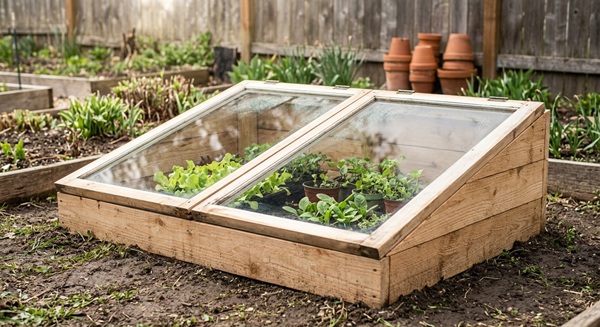
Harness Cold Frames for Winter Greens
Cold frames act as mini passive greenhouses. These bottomless wooden or brick boxes sit directly on your garden beds with a clear glass or polycarbonate top angled toward the southern sun.
Key Advantages
Temperature Boost: A cold frame traps solar thermal energy, keeping the soil and internal air 5°F to 20°F warmer than external temperatures.
Versatility: Ideal for overwintering hardy greens like spinach, kale, and claytonia, or for hardening off young seedlings in early spring.
DIY Friendly: You can build a simple cold frame using repurposed wooden pallet boards and an old window frame or storm door.
Pro Tip: Prop the lid open on sunny late fall and winter afternoons. Internal temperatures inside a sealed cold frame can spike quickly, scorching delicate tender greens even on a 40-degree day.
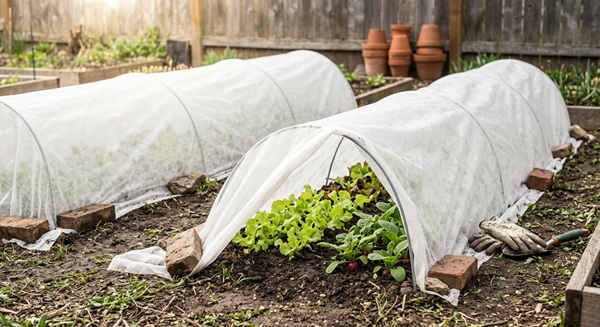
Deploy Low Tunnels and Floating Row Covers
For larger garden beds or longer crop rows, floating row covers and low hoops offer flexible, lightweight frost protection.
Choosing the Right Fabric
Lightweight Fabric (0.5 oz/sq. yd): Protects against light insect pests and offers 2°F to 3°F of frost protection while letting in up to 90% of sunlight.
Medium-to-Heavyweight Fabric (1.5–2.0 oz/sq. yd): Provides protection down to 24°F to 28°F, holding heat in during sudden early frosts or spring cold snaps.
How to Install Low Hoops
- Bend 1/2-inch PVC pipe or 9-gauge wire into arches over your growing beds.
- Anchor the ends firmly into the ground or attach them to raised bed frames.
- Drape spun-bond polyester or plastic sheeting over the hoops and secure the edges with rocks, soil, or sandbags to prevent wind lift.
Leverage Water Walls and Cloches
To protect individual plants, such as early tomato transplants or late-season peppers, cloches and water-filled tepees work exceptionally well.
| Method | Material | Best For | Frost Protection |
| Traditional Glass Cloches | Heavy glass bell jars | Individual specimen plants, herbs | Light freeze (30°F) |
| Upcycled Milk Jugs | Gallon plastic jugs cut at the bottom | Young seedlings, spring starts | Light frost (32°F) |
| Wall-o-Water Tepees | Water-filled plastic cylinders | Warm-season crops (tomatoes, peppers) | Hard freeze (down to 20°F) |
Water has a high heat capacity: it absorbs heat during sunny hours and slowly radiates that stored thermal energy back toward the plant during freezing nights.
Utilize Thermal Mass in Micro-Climates
Where you plant in your yard matters just as much as how you cover your beds. You can extend your season naturally by strategically placing cold-hardy crops near existing thermal masses.
South-Facing Brick or Stone Walls: Masonry absorbs heat throughout the day and warms the immediate surrounding soil at night.
Raised Beds: Soil in elevated beds warms up faster in spring and drains excess moisture better than in-ground garden plots.
Windbreaks: Fences, hedges, and garden sheds protect plants from desiccation and severe chill caused by winter winds.
Select Frost-Tolerant Crops & Master Succession Planting
The final piece of the season-extension puzzle comes down to plant selection and timing. Cold-hardy crops naturally handle freezing conditions by concentrating sugars in their cell walls, acting as a natural antifreeze.
Heavy-Frost Tolerant (Below 28°F): Kale, spinach, collards, garlic, winter onions, and claytonia.
Light-Frost Tolerant (30°F–32°F): Radishes, carrots, beets, Swiss chard, broccoli, and lettuce.
By starting cold-hardy seeds in late summer and protecting them as daylight wanes, you can harvest fresh veggies all through late autumn and into early spring, no commercial greenhouse needed.
Comment here